
When we talk about business growth these days, the conversation usually shifts immediately to digital transformation, AI, or remote work policies. We spend countless hours refining our software and making sure our digital interfaces are user-friendly. But there is a physical reality to business that stays just as vital as it was decades ago. We sometimes forget that business still happens in three dimensions.
The buildings we are in and the spaces where we meet our clients and employees are silent communicators of our values. You know, I’ve walked into offices that felt like a fortress, and others that felt like a deep breath of fresh air.
In the rush to go digital, we can’t afford to overlook the physical environment. True accessibility isn’t just a regulatory hurdle to clear. It’s a core part of a smart business strategy that puts human dignity first. After all, if a partner can’t navigate your office, how can they trust you to navigate their business challenges? And that is the point.
The Evolution of the Corporate Workspace
The whole idea of the office has gone through a radical change. It’s no longer just a place where people sit at desks from nine to five, listening to the low hum of the laptop at midnight. Instead, it’s become a hub for collaboration and a physical version of a company’s brand.
As businesses compete for the best talent, the quality of their physical spaces has become a major differentiator. I guess we’ve finally realized that people aren’t just gears in a machine.
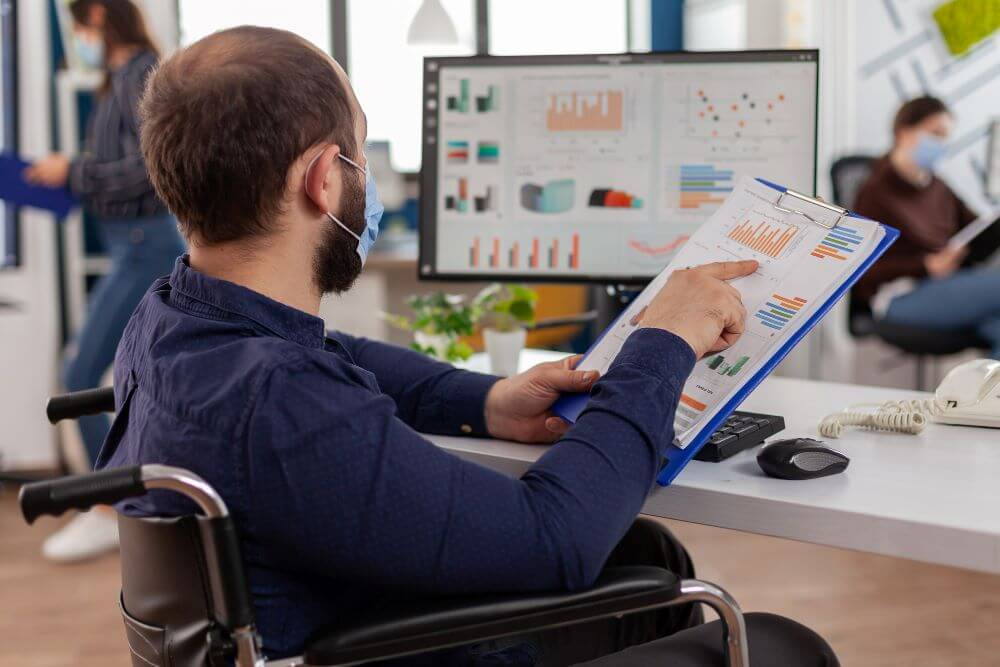
So, a truly inclusive workspace figures out what people need before they even walk through the front door. This proactive approach is often called universal design. It’s the practice of creating environments that are naturally accessible to people with all kinds of abilities. This goes way beyond just installing a ramp.
And it is about a philosophy where every part of the building works together to create a smooth experience for everyone. It is about how the space feels as you move through it.
The High Cost of the Minimum Standard
Many business owners see compliance as the finish line. They look at the legal requirements, check the boxes, and call it a day. But is “just enough” really the standard we want for our brands? It shouldn’t be.
This “minimum standard” mindset is actually pretty limiting.
When we only do what is legally required, we often miss the chance to create a truly welcoming space. In the world of commercial real estate, the details really matter. For instance, getting a handle on the specific ADA-bathroom requirements for commercial buildings is about more than just avoiding a fine. It is about making sure that every person who enters your building, whether they are a high-stakes investor or a new intern, can get around with total independence.
When a facility feels restrictive, it creates a subtle friction. That friction can eat away at the professional image you’ve worked so hard to build. It is the difference between feeling invited and feeling tolerated.
Accessibility as a Talent Magnet
We are navigating a unique time in the labor market. Employees are looking for more than just a paycheck. They want an environment that fits their ethics and supports their well-being. A company that invests in high-quality, accessible infrastructure is sending a clear message.
It says the organization values diversity in a real, tangible way.
But if an office space is hard to navigate for someone with a physical disability, the message is that they weren’t really considered during the planning stages. On the flip side, a space that is intuitively designed for accessibility builds a culture of belonging. It removes the physical barriers that lead to feelings of isolation. That sense of belonging is a huge driver of employee retention.
People stay where they feel supported. It is just human nature.
Future Proofing Your Physical Assets
From a financial perspective, inclusive design is just a smart long-term investment. The world is changing, and the number of people who need accessible features will only grow as the population ages.
So, by building or renovating with a high level of accessibility now, you’re basically future-proofing your business.
Fixing a building to meet new standards or to help a specific employee after the fact is almost always more expensive than doing it right from the start. Plus, buildings with high accessibility ratings often have higher resale values and attract better tenants. In the world of business continuity, staying ahead of the curve on inclusive infrastructure is good common sense.
The Psychological Impact of Inclusive Spaces
There is a psychological side to architecture that we often feel but don’t always talk about. Think about the last time you were in a space that felt cramped or hard to move through. It probably left you feeling a little stressed or unwelcome.
Now, compare that to a space with wide hallways and clear signs. The second one promotes a sense of calm.
In a B2B environment, you want your clients and partners to feel confident. You want them to focus on the business at hand, not on the struggle of finding a restroom or dealing with steep stairs. When the physical environment is effortless, the conversation can take center stage.
Inclusive design removes the distractions of the physical world.
Does your office space lower visitors’ heart rates, or raise them? Honestly, we have all been in spaces that made us want to leave before the meeting even started.
Bridging the Gap Between Intent and Execution
Most business leaders have good intentions when it comes to being inclusive. But there is often a gap between wanting to be inclusive and actually making it happen in the physical world.
Closing this gap requires a commitment to education and a willingness to view the office through a different lens.
It involves talking to experts, seeking employee feedback, and investing in high-quality materials.
And it also means recognizing that accessibility is an ongoing process. As technology advances and our understanding of human needs deepens, our physical spaces have to keep up. It is a journey, not a destination.
A New Vision for the Professional World
The businesses that thrive in the next few years will be the ones that recognize how their people, their values, and their physical spaces are all connected. We are moving away from a world of “doing just enough” toward one of radical inclusion.
By making accessibility a priority, we aren’t just making life easier for one group. We’re making the professional world better for everyone. We’re creating spaces that are more flexible and more human. When we design our offices with the whole spectrum of human experience in mind, we lay the foundation for a business that is truly built to last.