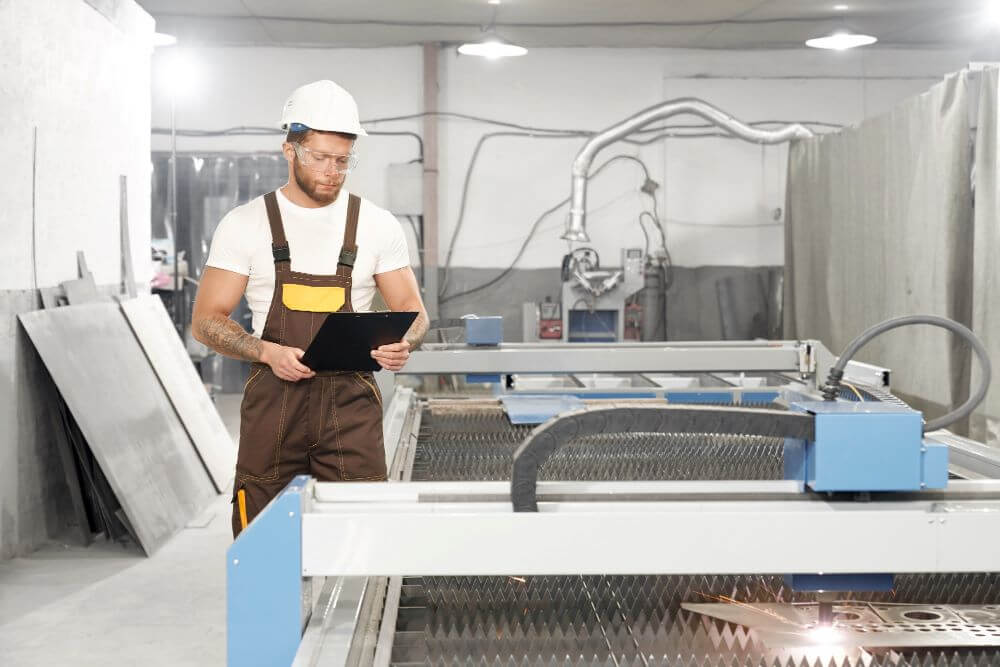

In today’s competitive manufacturing landscape, the pressure to deliver high-quality components at scale has never been greater. Industries ranging from automotive and aerospace to consumer electronics consistently seek solutions that balance precision, speed, and cost efficiency. Among the most effective answers to these demands is aluminum CNC machining. As the demand for high-volume production and mass manufacturing grows, understanding the unique advantages of aluminum CNC machining services becomes increasingly important for engineers, production managers, and procurement specialists. This article explores the key benefits, practical insights, and industry applications of aluminum CNC machining in large-scale production contexts.
The Unique Properties of Aluminum for Manufacturing
Aluminum is highly valued in industrial manufacturing for several compelling reasons. It is lightweight, with a density roughly one-third that of steel, making it ideal for applications where weight reduction is a priority, such as aerospace frames or automotive parts. Despite its lower density, aluminum offers impressive strength and rigidity, especially when alloyed with elements like magnesium or silicon.
Another critical attribute is its excellent machinability. Aluminum’s softness (relative to many metals) allows for faster cutting speeds, reduced tool wear, and lower energy consumption during machining processes. Additionally, aluminum has natural corrosion resistance due to its oxide layer, which extends the longevity of manufactured parts. Its capacity for high thermal and electrical conductivity further broadens its application range in electronics and heat management systems.
Why CNC Machining Is Ideal for High-Volume Aluminum Production
Computer Numerical Control (CNC) machining is a manufacturing process that uses pre-programmed computer software to control machine tools. When paired with aluminum, CNC machining delivers several advantages that are particularly relevant for high-volume and mass production.
First and foremost, CNC machinery offers exceptional repeatability and accuracy. Once a prototype is approved, the same digital design can be used to produce thousands—or even millions—of identical components with minimal variation. This level of consistency is critical in industries where part interchangeability and tight tolerances are required.
CNC machining also supports rapid production cycles. The combination of aluminum’s machinability and automated toolpaths means that large batches can be processed faster than many alternative methods, such as casting or manual machining. Moreover, aluminum CNC machining services often incorporate multi-axis capabilities, enabling the production of complex geometries in a single setup and reducing the need for multiple fixtures or secondary operations.
Cost Efficiency in Mass Manufacturing
One of the main concerns in high-volume manufacturing is controlling costs without sacrificing quality. Aluminum CNC machining services help achieve this balance in several ways. Due to aluminum’s ease of machining, tools last longer and require less frequent replacement, resulting in lower tooling costs over the lifespan of a project. The reduced cycle times also mean less machine downtime and higher overall throughput.
Additionally, the automation inherent in CNC machining reduces labor costs. Once a program is set up and validated, operators can oversee multiple machines simultaneously, focusing their attention on quality control and maintenance rather than manual operation. For mass manufacturing, this scaling of human resources translates directly to improved cost efficiency.
Material waste is another consideration. CNC machining is known for its subtractive nature, but with optimized programming and modern strategies such as nesting and adaptive toolpaths, waste can be minimized. Since aluminum scrap is highly recyclable, waste material can often be reclaimed and reused, further improving the process’s cost-effectiveness and sustainability.
Ensuring Quality and Consistency at Scale
Quality assurance is paramount in high-volume production. Aluminum CNC machining services are particularly effective at maintaining strict quality standards across large runs. Advanced CNC machines are equipped with real-time monitoring systems that track tool wear, part dimensions, and other critical parameters. This data-driven approach allows for immediate adjustments, preventing defects and ensuring that every part meets specifications.
Furthermore, aluminum CNC machining allows for integration with digital inspection tools such as coordinate measuring machines (CMMs) and laser scanners. These technologies provide precise feedback on part dimensions and surface finishes, enabling manufacturers to catch deviations early and maintain a high level of consistency throughout production.
The ability to quickly adjust machining parameters or update programming also means that any design changes can be implemented rapidly, minimizing disruption and scrap in ongoing production runs.
Flexibility and Scalability in Design
One of the greatest strengths of aluminum CNC machining services lies in their versatility. Whether the requirement is simple brackets or highly intricate components with complex internal features, CNC machining can accommodate a vast range of designs without the long lead times associated with custom tooling or molds.
This design flexibility extends to modifications and iterations. In mass manufacturing, requirements often evolve due to customer feedback, regulatory changes, or new innovations. Unlike casting or injection molding—where new tooling can be expensive and time-consuming—CNC programs can be modified and redeployed quickly. This agility enables manufacturers to respond to market demands and technological advances without significant delays.
Scalability is another key benefit. Once a process is validated for a small batch, scaling up to full production is straightforward, with minimal changes required to the setup or workflow. This makes aluminum CNC machining an excellent choice for both prototyping and ramping up to mass production.
For manufacturers looking to access these capabilities without investing in in-house equipment, specialist online platforms offer a practical alternative. Professional precision CNC machining services combine multi-axis capabilities, verified quality standards, and fast turnaround times, making it straightforward to scale aluminum component production to meet high-volume demands without the overhead of long-term supplier contracts or capital investment in machinery.
Industry Applications and Case Studies
Aluminum CNC machining services are widely used across multiple industries that depend on high-volume, high-precision production. In the automotive sector, aluminum components such as housings, brackets, and engine parts are produced in large quantities to support lightweighting initiatives and fuel efficiency goals. Aerospace manufacturers rely on CNC machining for parts ranging from structural frames to cabin components, where both precision and material performance are non-negotiable.
Consumer electronics is another field where aluminum CNC machining is indispensable. The sleek casings of smartphones, laptops, and tablets are often milled from solid aluminum blocks to achieve a premium finish and robust durability. Here, the combination of rapid turnaround, surface quality, and dimensional accuracy is critical for brand reputation and product performance.
Many medical device manufacturers also turn to aluminum CNC machining for components in imaging equipment, surgical instruments, and mobility aids. Given the sector’s rigorous quality and traceability requirements, CNC machining’s ability to produce identical parts with thorough documentation is especially valuable.
Addressing Challenges in High-Volume Aluminum CNC Machining
While aluminum CNC machining services offer numerous benefits, there are challenges to consider in mass manufacturing environments. Tool deflection and vibration can become concerns when working with thin-walled or intricate geometries, potentially affecting surface finish and dimensional accuracy. Advanced fixture design, optimized cutting strategies, and the use of specialized tooling help mitigate these issues.
Thermal expansion is another factor, as aluminum’s high coefficient of thermal expansion can influence tolerances, especially during long production runs. Temperature control and real-time compensation in CNC programming are essential for maintaining precision.
Lastly, while aluminum is generally easy to machine, certain high-strength alloys may present machining difficulties such as built-up edge or increased tool wear. Expertise in material selection and machining parameters is required to balance productivity with tool longevity and part quality.
The Future Outlook for Aluminum CNC Machining in Mass Production
The role of aluminum CNC machining services in high-volume manufacturing is poised to grow as industries increasingly prioritize lightweighting, performance, and sustainability. Advances in CNC automation, digital manufacturing, and data analytics are further enhancing the efficiency and reliability of large-scale production.
Emerging trends such as Industry 4.0, smart factories, and the integration of artificial intelligence are expected to drive even greater precision, flexibility, and cost control. As these technologies mature, aluminum CNC machining will remain at the forefront of mass manufacturing solutions, delivering value through innovation and adaptability.
Conclusion
Aluminum CNC machining services offer a compelling combination of speed, precision, cost efficiency, and scalability—qualities that are essential for high-volume production and mass manufacturing. By leveraging the unique properties of aluminum and the capabilities of modern CNC technology, manufacturers across diverse sectors can achieve consistent quality, rapid turnaround, and design flexibility at scale. As industry demands evolve, the strategic adoption of aluminum CNC machining will continue to play a critical role in enabling innovation, competitiveness, and sustainable manufacturing practices.