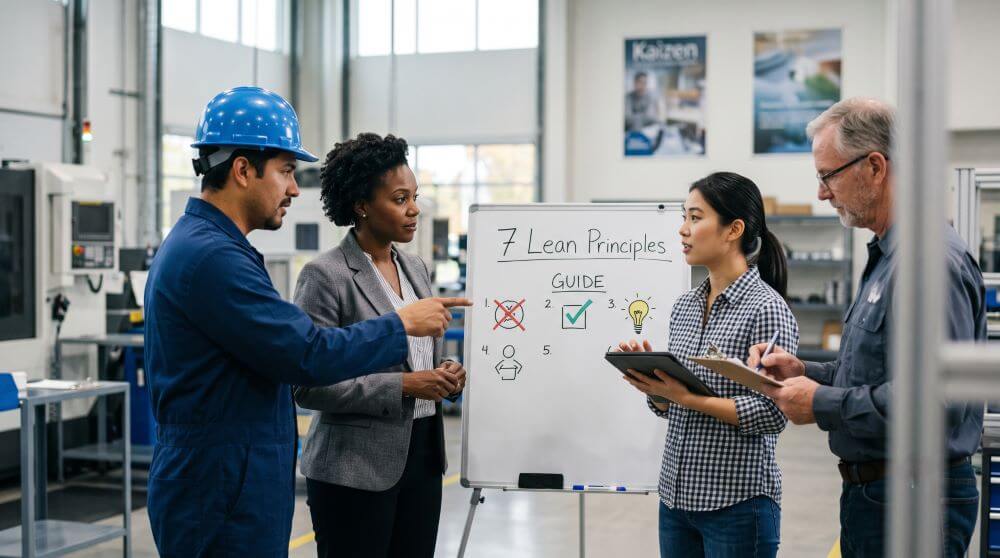

Manufacturing is about finding the best ways to make products and sell them at a good price. These days people expect more from the manufacturing process. They want more from the machines the way things are made and from the people who work there. This is because customers want better products and competitors are delivering them.
The goal of manufacturing is not just to make things faster but to get rid of steps that do not help the product or the customer.
Understanding the 7 Lean Principles
The 7 principles are a way to improve manufacturing in a systematic and understandable way. They are about making changes that can make a big difference. For people who want to know more about these principles this guide to lean manufacturing principles has information and practical ideas before applying them to a manufacturing environment.
1. Waste Elimination
Every process has steps that either help or hurt. Steps that hurt are things like doing much , checking too much, moving things around and having too much extra stock. A lean approach tries to get rid of or minimize these steps.
2. Embed Quality in the Process
Quality is not something you check after something is made. Quality has to be part of every step of making something. If you have processes, quality checks and fix problems right away you will have less waste and mistakes and the customer will be happier.
3. Focus on Lifelong Learning
A lean way of thinking works best when people are always learning. If people keep learning and paying attention to what works they will be able to do their jobs better and the organization will stay competitive.
4. Optimize Flow
The goal of lean manufacturing is to be productive without wasting anything. This means having a process with no interruptions. If processes are hard to follow, people do not communicate well or tasks are not spread out evenly it can slow down production. Organizing tasks and improving schedules can keep production moving.
5. Delegate Responsibility
The people who work on the production line are usually the first to see when something goes wrong. If you encourage them to suggest changes and find problems they will be more engaged. The organization will get better.
6. Sub-optimize for Maximum Value
If you only focus on making one part of the process without thinking about the whole process you might just move the problem somewhere else. Lean manufacturing is about looking at the process from getting raw materials to shipping the final product. This helps you find problems and work better as a team.
7. Measure and Improve
Lean manufacturing is about always measuring and improving. This means tracking things like how long it takes to make something, how many mistakes are made, how well equipment is used and how often things are shipped on time. This helps you understand what works.
Why Lean Manufacturing Is Beneficial
Companies that use manufacturing principles have lower costs, better quality, faster production and happier customers. Lean manufacturing also improves the work culture. Let employees find ways to make their jobs better.
Lean manufacturing is an efficient way to make things. Using the 7 principles in manufacturing is a system that helps you keep getting better and eliminate waste. This improves the quality of the manufacturing process. When you use principles consistently you can improve the bottom line, make customers happier and make the enterprise more productive.
FAQs
What are the 7 lean manufacturing principles?
The 7 lean manufacturing principles are about eliminating waste, improving quality, optimizing workflows, empowering employees and always improving. They help manufacturers deliver value with fewer resources.
What is the primary objective of manufacturing?
The primary objective of manufacturing is to eliminate waste and improve efficiency and product quality. This helps reduce costs and deliver value to customers.
Can lean manufacturing be applied to small businesses?
Yes lean manufacturing can help businesses of all sizes by improving workflows reducing waste and getting employees involved in making things
What is the first step in applying principles?
The first step is to find waste in production processes and figure out how to eliminate it. Standardized work and always checking on things can help you get better on the run.
What are the long-term benefits of manufacturing?
Lean manufacturing can lead to costs, higher productivity, better product quality and shorter lead times. It also makes teams work better together and improves business competitiveness.