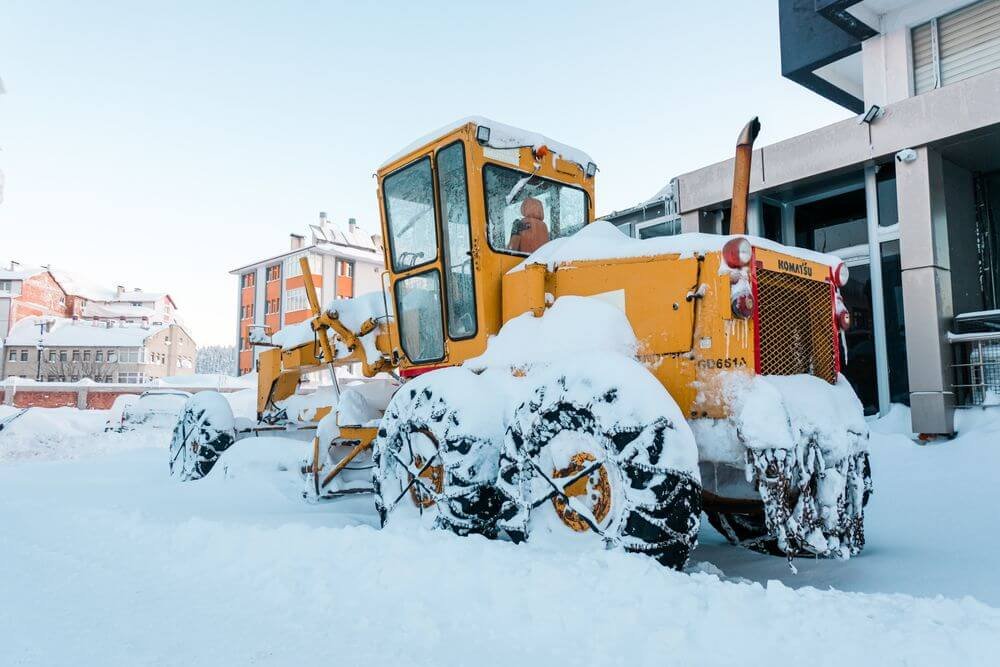

Every winter, the first hard freeze produces the same calls. A loader that will not start. A generator that dies at 4 a.m. A fuel filter packed with wax. None of these problems are unusual, and most of them can be prevented with a fuel plan put in place before the temperature drops.
For ops managers, dispatchers, and superintendents, here is how to get construction equipment and its fuel ready for the cold.
Why diesel struggles in the cold
Diesel contains paraffin wax. As temperatures fall, that wax starts to form crystals. The temperature where this begins is called the cloud point. Keep cooling the fuel and the crystals thicken until it stops flowing, which is the gel point.
Long before fuel fully gels, those crystals can clog filters and starve an engine. The exact temperatures vary by fuel blend and region, which is why the fuel in your tanks matters as much as the forecast.
Know what fuel is going into your equipment
Fuel suppliers in colder regions typically switch to a winter blend, often a mix of No. 2 diesel with No. 1 diesel or treated with cold flow additives, to lower the temperature where problems start. Ask your supplier:
- When they switch to winter blend for your area.
- Whether additives are already in the fuel, or whether you should treat it yourself.
- What temperature range their winter fuel is designed for.
If you add your own anti-gel treatment, timing matters. Most cold flow additives need to go in before the fuel reaches its cloud point. Once wax has formed, they do far less good.
Keep water out of the system
Cold weather makes water a bigger problem. Condensation forms inside partly empty tanks, and water in fuel can freeze into ice crystals that block lines and filters.
- Keep equipment and site tanks topped off, especially overnight, to limit the air space where condensation forms.
- Drain water separators regularly.
- Change fuel filters before the season starts and keep spares on site.
Do not forget DEF
Diesel exhaust fluid freezes at about 12°F (-11°C). Equipment with DEF systems is built with heaters to manage this in the machine, but stored DEF in jugs or totes is often left in unheated containers on site.
Frozen DEF that thaws can still be used, but a machine cannot use it while it is frozen solid in a container. Store DEF according to the manufacturer’s guidance, keep supply on a schedule, and avoid buying more than you can protect from the cold.
Budget for extra fuel burn
Winter changes how much fuel a site uses, not just how it behaves. Plan for:
- More idling. Operators warm up machines longer and keep them running between tasks.
- Heating equipment. Ground thaw heaters, space heaters, and enclosure heaters on concrete work can burn a lot of fuel.
- Longer lighting hours. Shorter days mean light towers and generators run longer.
If your fueling schedule was built on summer consumption, it will run short in January. Revisit delivery frequency and tank levels at the start of the season.
Schedule deliveries around the weather
The worst time to need fuel is during an ice storm, when roads are dangerous and every contractor in the area is calling at once. Build weather into the dispatch plan:
- Fill before the freeze. When a cold front is in the forecast, top off equipment, generators, and site tanks a day or two ahead.
- Confirm site access. Frozen ruts, ice, and snow can keep a fuel truck from reaching machines. Clear a route and a staging area.
- Know your emergency options. Get your supplier’s after-hours contact and expected response time before you need them.
This applies in warmer states too. The February 2021 winter storm in Texas showed how quickly a region that rarely plans for extreme cold can lose power, fuel access, and work time all at once.
Suppliers that provide off-road diesel delivery directly to job sites, such as Fuel Monkey, can fuel machines in place the evening before a forecasted freeze. That way crews are not trying to move fuel across an icy site the next morning.
Equipment habits that help
A few simple habits on site prevent a lot of winter calls:
- Plug in block heaters overnight where power is available.
- Park equipment out of the wind when possible.
- Fuel at the end of the shift, not the start, so tanks sit full overnight.
- Check batteries before the season. Cold weather exposes weak ones fast.
A winter fuel readiness checklist
- Confirm when your supplier switches to winter blend fuel.
- Decide who treats the fuel and when.
- Replace fuel filters and stock spares on every site.
- Drain water separators and keep tanks topped off.
- Move DEF into protected storage.
- Increase delivery frequency to match winter consumption.
- Write down the pre-freeze fueling routine and emergency contacts.
Closing thought
Cold weather problems with diesel are predictable, which means they are preventable. Ops teams that plan fuel blend, storage, delivery timing, and site access before the first freeze spend the winter building instead of troubleshooting.
Fuel Monkey provides off-road diesel, gasoline, and DEF delivery to construction sites and heavy equipment