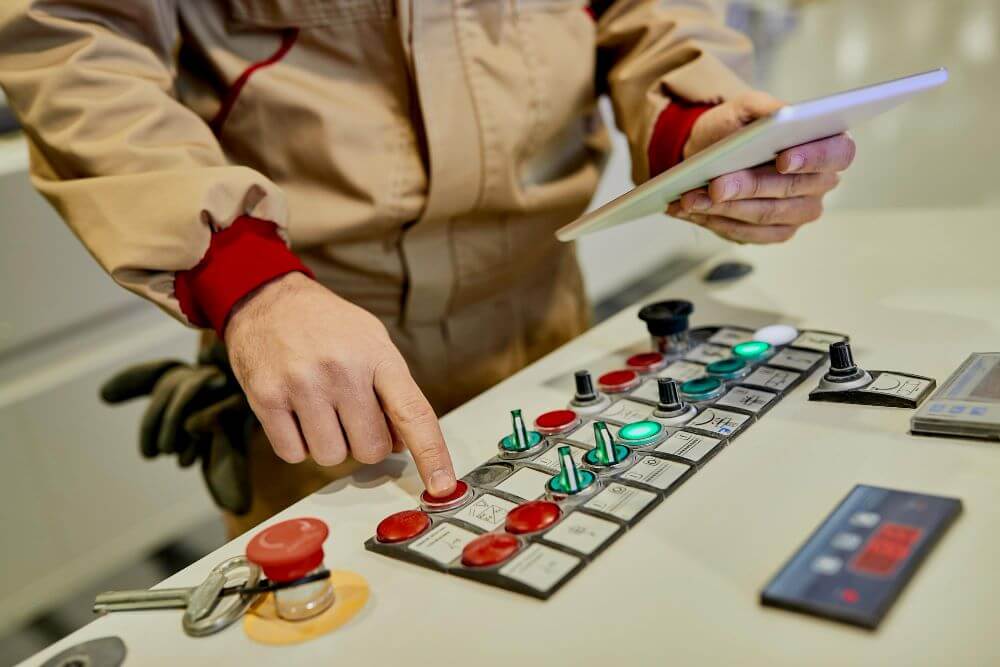

Behind almost every electronic device is a switch that helps control how it operates. Whether it’s powering up a household appliance or managing signals within a communications network, switches play a vital role in directing electrical activity.
Different applications demand different switching solutions, ranging from simple manually operated components to advanced electronic switches capable of responding instantly within complex systems. Each type is designed with specific performance, durability and safety requirements in mind. By understanding how various switches function, engineers and manufacturers can select the most effective option for improving efficiency, reliability and overall device performance across a broad range of industries.
Mechanical switches for user control
Mechanical switches continue to play an important role in both consumer and industrial electronics, offering a simple and reliable way for users to control electrical circuits.
Common examples of switches include:
- Toggle
- Rocker
- Push-button
- Slide
- Rotary
Each is designed to suit specific applications and operating preferences.
Mechanical switches are simple to operate and offer tactile feedback, allowing users to clearly feel when an action has been performed. As a result, they’re frequently found in household appliances, machinery control panels, audio equipment and a wide range of electronic devices.
Electronic and semiconductor switches in modern circuits
Unlike mechanical switches, electronic switches rely on semiconductor components such as transistors, MOSFETs and thyristors to control the flow of current without any moving parts. This allows them to operate at extremely high speeds while delivering accurate and reliable performance.
Their solid-state design also reduces wear and maintenance requirements, making them well suited to demanding applications. Electronic switches are widely used in digital devices, power supplies, battery management systems and industrial automation equipment, where precise control is essential.
As modern electronics continue to become more sophisticated, semiconductor switches play a key role in improving efficiency and overall system reliability.
Industrial control switches and automation
Industrial environments rely on specialized switches to keep equipment operating safely and efficiently. Examples of these switches include:
- Push-button
- Selector
- Limit
- Emergency-stop
They’re commonly used to control machinery and respond to changing operating conditions.
These components act as an important link between machine operators and programmable logic controllers (PLCs), helping to ensure accurate communication throughout automated systems.
Emergency-stop switches are particularly critical for protecting people and equipment by allowing machines to be shut down quickly when required. Demanding industrial environments means that industrial control switches play a key role in maintaining operational safety and consistent performance.
Network switches in business electronics
Forming the foundation of many business IT systems, network switches are key. They can enable computers, servers, printers and other connected devices to communicate efficiently across a local area network (LAN).
Their role is to direct data traffic to the correct destination, helping maintain reliable network performance. Businesses can choose between unmanaged switches, which offer simple plug-and-play installation, and managed switches, which provide greater control over network configuration, security and monitoring.
Managed solutions are particularly valuable in larger or more complex environments where performance and visibility are priorities.